
Understanding Class Action Lawsuits in Canada
Class action lawsuits in Canada offer a legal avenue for individuals who have suffered similar harm due to the actions of a corporation or other entity to seek compensation collectively. These lawsuits consolidate individual claims into a single case, making it more efficient and cost-effective for both the plaintiffs and the court system. The underlying principle is that when a large group of people experiences the same type of damage from a common source, they have a stronger case and greater resources when they act together. Class actions can arise from a wide range of issues, including defective products, securities fraud, anti-competitive practices, privacy breaches, and consumer protection violations. The process begins when a representative plaintiff files a lawsuit on behalf of the entire class. The court must then certify the class, which means determining that the proposed class meets certain legal requirements, such as commonality of issues, typicality of claims, adequacy of representation, and ascertainability of the class members. Once a class is certified, notice is typically given to potential class members, informing them of the lawsuit and their rights. Class members then have the option to participate in the lawsuit or to opt-out if they prefer to pursue their claims individually the option to participate in the lawsuit.
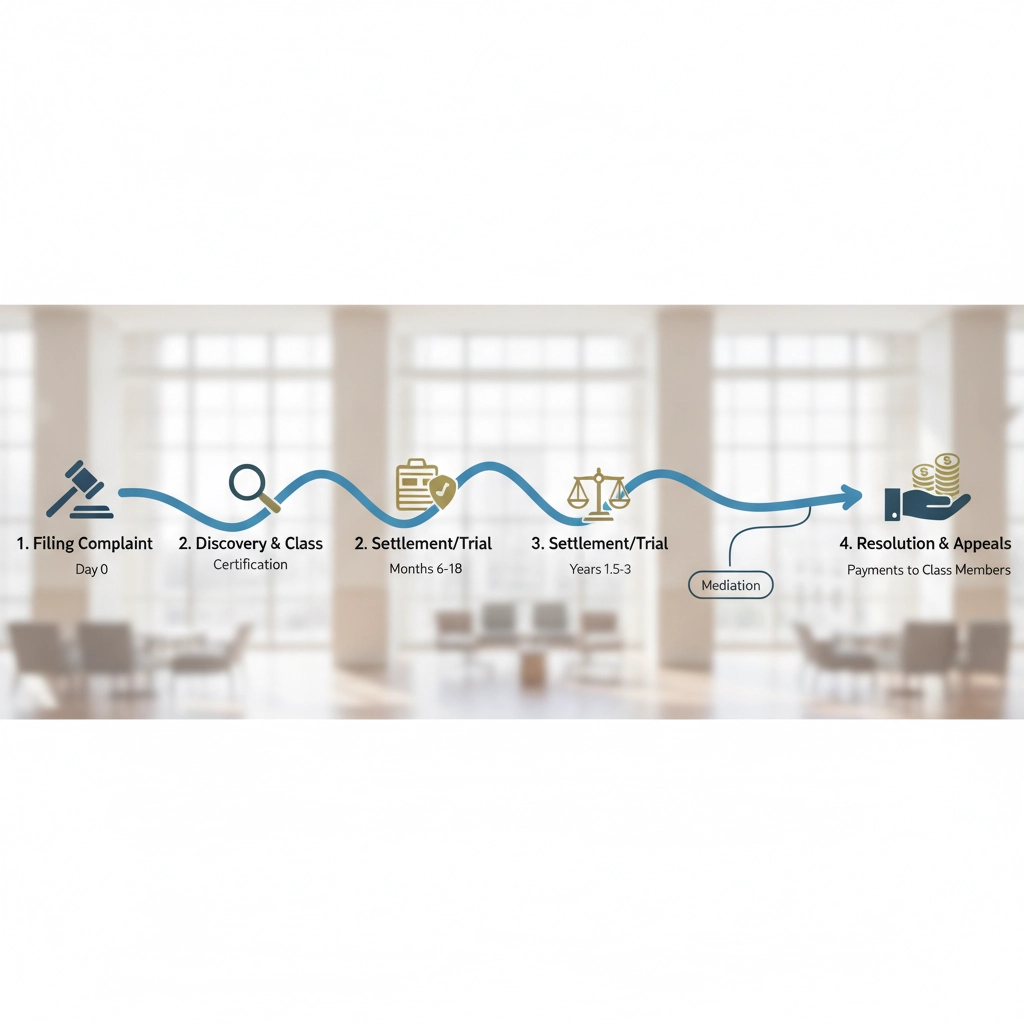

The Lifecycle of a Class Action Case
A class action lawsuit typically progresses through several stages, starting with the initial filing and class certification. After certification, the case proceeds to discovery, where both sides gather evidence through document requests, interrogatories, and depositions. This stage can be lengthy and complex, as it involves uncovering and analyzing a substantial amount of information. Following discovery, the parties may engage in settlement negotiations. If a settlement is reached, it must be approved by the court to ensure that it is fair, reasonable, and adequate for the class members. The court will consider factors such as the strength of the plaintiffs’ case, the risks of litigation, the complexity and expense of further proceedings, and the opinions of class counsel and class members. If a settlement is not reached, the case will proceed to trial, where the plaintiffs must prove their claims to a judge or jury. If the plaintiffs prevail at trial, the court will determine the appropriate remedy, which may include monetary damages, injunctive relief, or other forms of compensation. The entire process, from filing to final resolution, can take several years, depending on the complexity of the case and the number of parties involved. Understanding this lawsuit process class action lawsuit process can help individuals navigate potential claims.
Finding Current Class Action Settlements
Staying informed about current class action settlements in Canada requires diligence and the use of various resources. One of the primary sources of information is the websites of law firms specializing in class action litigation. These firms often maintain lists of ongoing cases and settled claims, providing details about eligibility criteria, deadlines for filing claims, and the potential benefits available to class members. Another valuable resource is the Canadian Bar Association, which offers information and resources related to class action law. Additionally, several websites and online platforms are dedicated to tracking class action settlements across various industries and sectors. These websites often provide searchable databases that allow individuals to find settlements relevant to their specific circumstances. It is also advisable to monitor news outlets and legal publications for updates on class action lawsuits and settlements. Furthermore, individuals can sign up for email alerts or RSS feeds from relevant websites and organizations to receive notifications about new developments in class action litigation. By actively seeking out information from these diverse sources, individuals can increase their chances of identifying and participating in class action settlements for which they may be eligible.


How to Claim Your Share of a Settlement
Once a class action settlement is reached and approved by the court, eligible class members have the opportunity to file a claim to receive their share of the settlement funds. The process for filing a claim typically involves completing a claim form and providing supporting documentation to verify eligibility. The claim form will usually require information such as the claimant’s name, contact information, and details about the harm or damages they suffered. Supporting documentation may include receipts, contracts, medical records, or other evidence relevant to the claim. The deadline for filing a claim is typically specified in the settlement agreement and is strictly enforced. It is crucial to submit the claim form and all required documentation by the deadline to ensure eligibility for compensation. Claim forms and instructions on how to file a claim are usually available on the website of the settlement administrator or the law firm handling the case. In some cases, class members may be required to attend a hearing or provide additional information to support their claim. After the claims are processed, the settlement administrator will distribute the settlement funds to eligible class members, typically by check or electronic transfer. The amount of compensation each class member receives will depend on the terms of the settlement agreement and the number of valid claims filed claiming your share.
Key Considerations Before Filing a Claim
Before filing a claim in a class action settlement, it is essential to carefully consider several factors to ensure that participation is beneficial and aligned with individual circumstances. First and foremost, potential claimants should thoroughly review the settlement agreement and the eligibility criteria to determine whether they meet the requirements for participation. It is important to understand the nature of the lawsuit, the specific damages covered by the settlement, and any limitations or exclusions that may apply. Claimants should also assess the potential amount of compensation they may receive and weigh it against the time and effort required to file a claim. In some cases, the individual recovery may be relatively small, especially if the settlement involves a large number of class members. Furthermore, it is crucial to understand the legal implications of participating in a class action settlement. By filing a claim, class members typically release their rights to pursue individual lawsuits against the defendant for the same claims covered by the settlement. This means that individuals who believe they have a stronger case or may be entitled to greater compensation may choose to opt-out of the class action and pursue their claims independently. Finally, it is advisable to seek legal advice from an attorney before filing a claim, especially if the individual circumstances are complex or the potential recovery is significant. An attorney can provide guidance on the legal implications of participating in the settlement and help assess whether opting-out and pursuing an individual lawsuit may be a more advantageous option.


Staying Informed and Protecting Your Rights
Navigating the landscape of class action settlements in Canada requires proactive effort and a commitment to staying informed about ongoing cases and potential opportunities. By regularly monitoring relevant websites, news outlets, and legal publications, individuals can increase their awareness of class action lawsuits that may affect them. Signing up for email alerts and RSS feeds from reputable sources can also help ensure that they receive timely notifications about new developments in class action litigation. When a class action settlement is announced, it is crucial to carefully review the settlement agreement and the eligibility criteria to determine whether participation is appropriate. If there are any doubts or concerns, seeking legal advice from an attorney is always a prudent step. Furthermore, individuals should be vigilant about protecting their personal information and avoiding scams related to class action settlements. Be wary of unsolicited emails or phone calls requesting sensitive information or demanding upfront fees to participate in a settlement. Legitimate settlement administrators will never ask for payment to process a claim. By staying informed, exercising caution, and seeking professional advice when needed, individuals can effectively protect their rights and maximize their chances of receiving fair compensation through class action settlements in Canada.
In conclusion, Canadian class action settlements provide a vital mechanism for individuals to collectively seek redress for widespread harm. By understanding the process, staying informed about current cases, and carefully considering the implications of participating, individuals can navigate the system effectively and claim their rightful share of compensation. Actively monitoring settlement opportunities and seeking legal advice when necessary are crucial steps in protecting one’s rights and ensuring a fair outcome.