
Introduction to Canadian Class Actions
Class action lawsuits in Canada offer a way for individuals with similar grievances to unite and seek justice against corporations or institutions. These lawsuits consolidate individual claims into a single case, making it more efficient and cost-effective to pursue legal action. Understanding your rights and the process is crucial if you believe you’ve been harmed by a product, service, or entity. This guide provides a detailed overview of Canadian class action lawsuits, covering eligibility, participation, legal representation, the lawsuit process, risks, and how to track current settlements. Whether you’re considering joining a class action or simply want to understand your legal options, this guide will equip you with the knowledge you need to make informed decisions.


Eligibility for a Canadian Class Action
Determining whether you qualify for a Canadian class action lawsuit involves assessing several factors. First, there must be a clearly defined class of individuals who have suffered similar harm. This harm typically arises from the same product, service, or conduct. For example, a defective product that causes injury to multiple consumers could form the basis of a class action. Second, there needs to be a common issue of fact or law among the class members. This means that the underlying legal or factual question must be substantially similar for all individuals involved. Third, the class representative, who is the individual leading the lawsuit on behalf of the class, must adequately represent the interests of all class members. This includes having the resources and dedication to pursue the case diligently. Finally, a class action must be the preferable method of resolving the claims. This means that it must be more efficient and effective than individual lawsuits. To determine your specific eligibility, carefully review the details of the class action, including the class definition and the nature of the harm alleged.
Joining a Class Action Settlement: A Step-by-Step Guide
Once a class action settlement is reached, the process of joining involves several key steps to ensure you receive your entitled compensation. First, stay informed about the settlement. The details are usually published on the court’s website, the class action administrator’s website, and sometimes in newspapers or online news sources. Second, review the settlement terms carefully. Understand the eligibility criteria, the amount of compensation offered, and any deadlines for submitting a claim. Third, gather the necessary documentation to support your claim. This may include receipts, contracts, medical records, or other evidence that demonstrates you are a member of the class and have suffered the alleged harm. Fourth, complete the claim form accurately and submit it by the specified deadline. The claim form typically requires you to provide your personal information, details about your claim, and supporting documentation. Fifth, be patient. The processing of claims can take several months or even years, depending on the complexity of the case and the number of claims filed. Finally, if you have questions or concerns about the settlement or the claims process, contact the class action administrator or the class counsel for assistance. Following these steps diligently will increase your chances of successfully joining the class action settlement and receiving your rightful compensation.

Choosing the Right Class Action Lawyer
Selecting the right legal representation is crucial for maximizing your chances of success in a class action lawsuit. Class action lawyers possess specialized knowledge and experience in handling complex litigation involving numerous plaintiffs. When choosing a lawyer, consider their experience with class action lawsuits, particularly those involving similar issues to your case. Look for a lawyer who has a proven track record of success in obtaining favorable settlements or judgments for their clients. Evaluate their understanding of the relevant laws and regulations, as well as their ability to effectively manage and coordinate large-scale litigation. Consider the law firm’s resources and support staff, as class action lawsuits often require significant resources to investigate, prepare, and present the case. Assess the lawyer’s communication skills and their willingness to keep you informed about the progress of the case. Discuss their fees and costs upfront to ensure you understand the financial implications of retaining their services. Ultimately, choose a lawyer who you trust and feel confident will advocate for your best interests throughout the class action process.
The Canadian Class Action Lawsuit Process
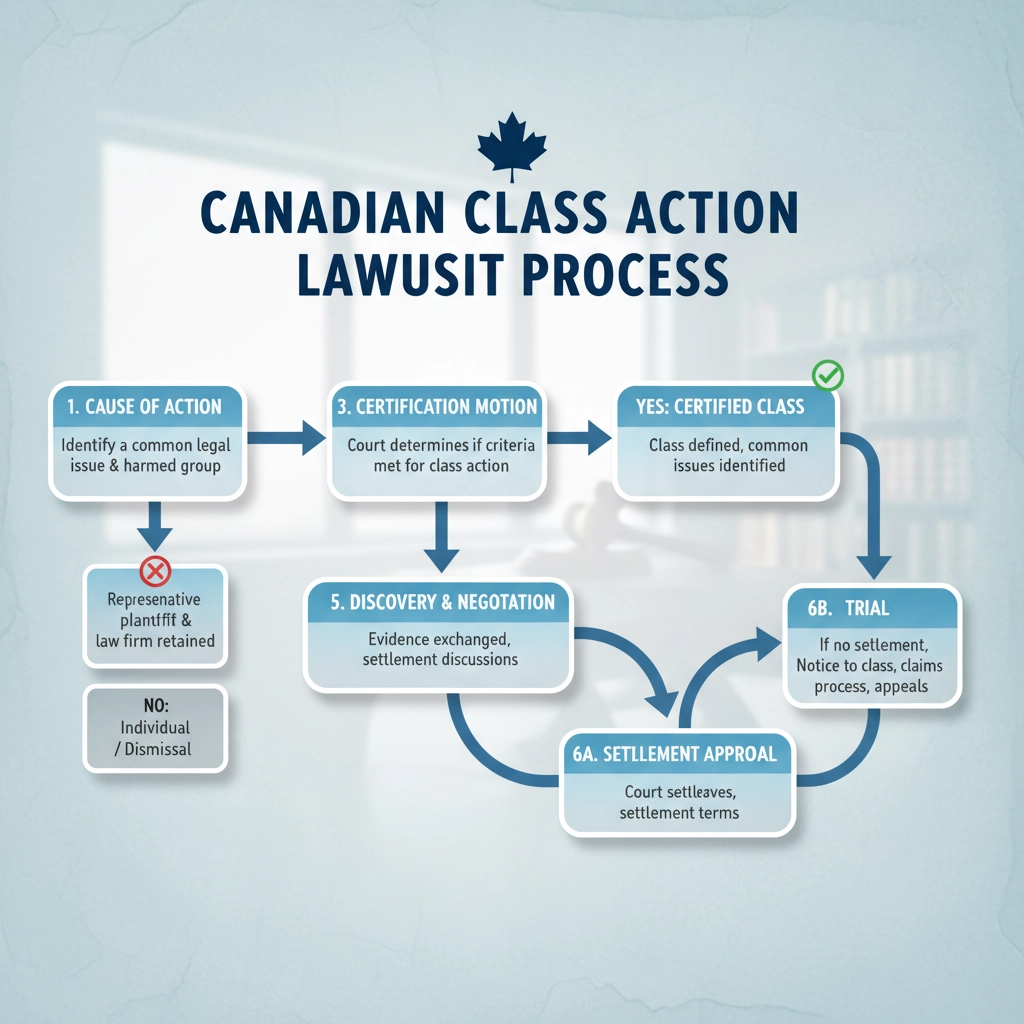
The Canadian class action lawsuit process involves several distinct stages, from filing the initial claim to receiving compensation. First, a representative plaintiff files a lawsuit on behalf of a proposed class of individuals who have suffered similar harm. Second, the court must certify the class action, determining whether it meets the legal requirements for proceeding as a class action. This includes assessing whether there is a clearly defined class, common issues of fact or law, and whether a class action is the preferable method of resolving the claims. Third, if the class action is certified, the parties engage in discovery, which involves gathering evidence and information relevant to the case. Fourth, the parties may attempt to negotiate a settlement. If a settlement is reached, it must be approved by the court to ensure it is fair, reasonable, and in the best interests of the class members. Fifth, if a settlement is not reached, the case proceeds to trial, where the court determines the liability of the defendant and the amount of damages to be awarded. Sixth, if the plaintiff prevails at trial or a settlement is approved, class members can submit claims to receive their share of the compensation. Finally, the class action administrator distributes the funds to the eligible class members. Understanding each stage of the process can help you navigate the complexities of a class action lawsuit and ensure your rights are protected.


Opting In vs. Opting Out of a Class Action
In Canadian class action lawsuits, class members typically have the option to either opt in or opt out of the lawsuit. Opting in means that you affirmatively choose to participate in the lawsuit and be bound by its outcome. This typically involves submitting a claim form or registering with the class action administrator. The benefit of opting in is that you may be entitled to receive compensation if the class action is successful, either through a settlement or a judgment. However, by opting in, you also give up your right to pursue your own individual lawsuit against the defendant. Opting out, on the other hand, means that you choose not to participate in the class action and retain your right to pursue your own individual lawsuit. This may be a preferable option if you believe your individual damages are significantly higher than what you would receive in the class action, or if you have specific legal strategies you want to pursue. However, by opting out, you are not entitled to receive any compensation from the class action settlement or judgment. The decision to opt in or opt out depends on your individual circumstances, the nature of the harm you have suffered, and your assessment of the potential benefits and risks of each option.
Tracking Current Settlements and Claiming Your Share
Staying informed about current class action settlements in Canada is essential to ensure you don’t miss out on potential compensation. Several resources can help you track these cases and claim your share. Websites such as ClassAction.org, Consumer Protection BC, and the Canadian Bar Association often provide information on ongoing class actions and settlements. Additionally, many law firms specializing in class action litigation maintain websites with up-to-date information on their cases. Once you identify a class action settlement for which you may be eligible, carefully review the settlement terms to understand the eligibility criteria, the amount of compensation offered, and the deadline for submitting a claim. Gather the necessary documentation to support your claim, such as receipts, contracts, or medical records. Complete the claim form accurately and submit it by the specified deadline. Be sure to keep copies of all documents you submit for your records. After submitting your claim, be patient, as the processing of claims can take several months or even years. If you have questions or concerns about the settlement or the claims process, contact the class action administrator or the class counsel for assistance. By actively tracking current settlements and diligently following the claims process, you can maximize your chances of receiving your rightful compensation.
Risks of Joining a Class Action Lawsuit
While joining a class action lawsuit can offer the potential for compensation, it’s essential to be aware of the potential downsides and risks involved. One of the primary risks is the limited control you have over the outcome of the case. As a class member, you are bound by the decisions made by the class representative and the class counsel, even if you disagree with their strategies or settlement terms. Another risk is the potential for a small payout. In some class action settlements, the compensation received by individual class members may be relatively small, especially if there are a large number of claimants. There is also the risk of the class action being unsuccessful. If the court rules against the class or the parties are unable to reach a settlement, you may not receive any compensation. Additionally, joining a class action may require you to disclose personal information, which could raise privacy concerns. It’s also important to be aware of the legal fees and expenses associated with the class action, which are typically deducted from the settlement or judgment. Before joining a class action, carefully weigh the potential benefits against the risks and consider seeking legal advice to understand your rights and obligations.
Conclusion to Class Actions in Canada
Canadian class action lawsuits provide a valuable mechanism for individuals to seek redress for widespread harm caused by corporations or institutions. Understanding the eligibility requirements, the process of joining a settlement, the importance of legal representation, and the potential risks involved is crucial for making informed decisions. By staying informed about current settlements, diligently following the claims process, and seeking legal advice when needed, you can protect your rights and maximize your chances of receiving fair compensation. Whether you’re considering joining a class action or simply want to understand your legal options, this guide has provided you with a comprehensive overview of Canadian class action lawsuits, empowering you to navigate this complex legal landscape with confidence.