
Introduction to Machine Learning Fundamentals
Machine learning, at its core, is about enabling computers to learn from data without explicit programming. It’s a field of artificial intelligence (AI) that allows systems to improve their performance on a specific task over time, based on the data they are exposed to. Instead of being directly programmed with rules, machine learning algorithms identify patterns, make predictions, and learn from their mistakes. This capability has revolutionized numerous industries, from healthcare and finance to marketing and transportation, driving innovation and efficiency. Understanding the fundamentals of machine learning is crucial for anyone seeking to leverage its power and contribute to its ongoing development. The ability to analyze vast amounts of data and extract meaningful insights is becoming increasingly valuable in today’s data-driven world. AI is transforming healthcare
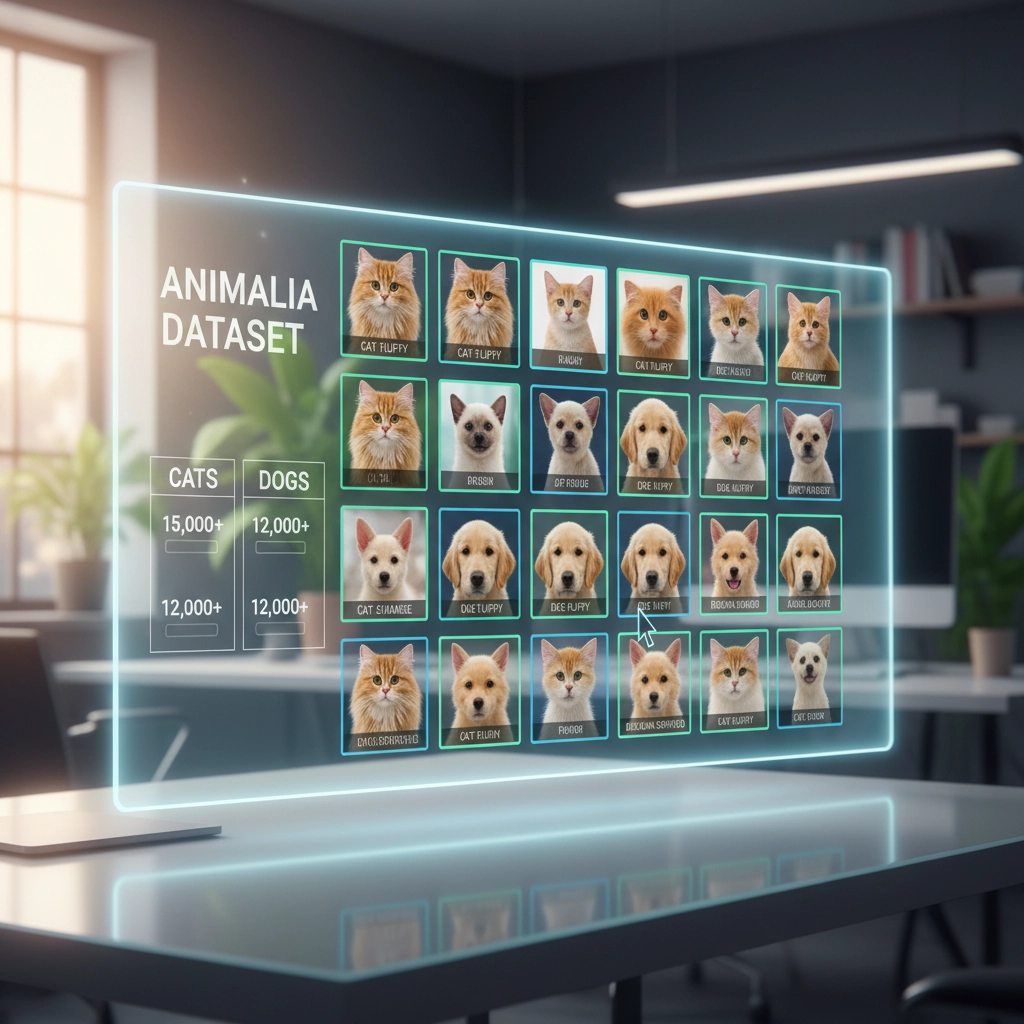

Supervised Learning: Learning from Labeled Data
Supervised learning is one of the most common and well-understood types of machine learning. In this paradigm, the algorithm is trained on a dataset that is labeled, meaning that each data point is paired with a corresponding correct answer or target variable. The goal of the algorithm is to learn a mapping function that can accurately predict the target variable for new, unseen data. For example, in image classification, a supervised learning algorithm might be trained on a dataset of images labeled as either “cat” or “dog.” The algorithm learns to identify the features that distinguish cats from dogs, and then uses this knowledge to classify new images. Common supervised learning algorithms include linear regression, logistic regression, support vector machines (SVMs), decision trees, and neural networks. These algorithms differ in their complexity and suitability for different types of data and problems. The performance of a supervised learning model is typically evaluated using metrics such as accuracy, precision, recall, and F1-score, depending on the specific task.
Unsupervised Learning: Discovering Hidden Patterns
Unsupervised learning deals with unlabeled data, where the algorithm must discover patterns and structures on its own, without any explicit guidance. The goal is to find hidden relationships, group similar data points together, or reduce the dimensionality of the data. Clustering is a popular unsupervised learning technique that aims to partition data into clusters, where data points within the same cluster are more similar to each other than to those in other clusters. K-means clustering is a widely used algorithm that assigns data points to the nearest cluster based on their distance from the cluster centroid. Another important unsupervised learning technique is dimensionality reduction, which aims to reduce the number of variables in a dataset while preserving its essential information. Principal component analysis (PCA) is a common dimensionality reduction technique that identifies the principal components of the data, which are the directions of maximum variance. Unsupervised learning is often used for exploratory data analysis, anomaly detection, and feature extraction. For example, AI is enabling healthcare providers to predict and prevent disease outbreaks Predictive Analytics for Healthcare.

Reinforcement Learning: Learning Through Interaction
Reinforcement learning is a paradigm where an agent learns to make decisions in an environment to maximize a reward signal. The agent interacts with the environment, takes actions, and receives feedback in the form of rewards or penalties. The goal of the agent is to learn an optimal policy, which is a mapping from states to actions, that maximizes the cumulative reward over time. Unlike supervised learning, reinforcement learning does not rely on labeled data. Instead, the agent learns through trial and error, exploring different actions and observing their consequences. This makes reinforcement learning suitable for problems where it is difficult or impossible to provide labeled data, such as game playing, robotics, and control systems. Q-learning and deep Q-networks (DQN) are popular reinforcement learning algorithms that learn a Q-function, which estimates the expected reward for taking a specific action in a specific state. Reinforcement learning has achieved remarkable success in recent years, with algorithms capable of mastering complex games such as Go and chess. AI-driven robotic surgery exemplifies the use of AI and robotics in performing complex tasks with greater precision AI-Driven Robotic Surgery.
Evaluating and Fine-Tuning Machine Learning Models
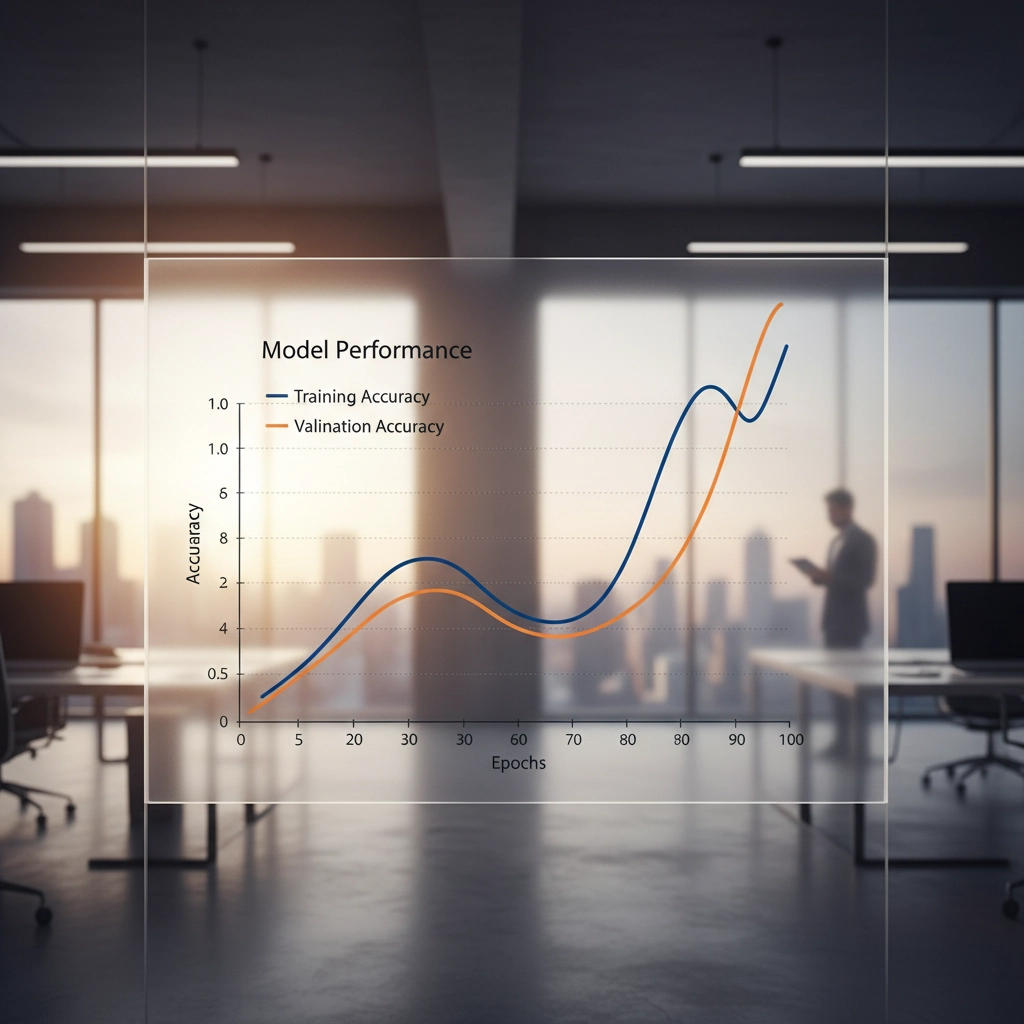
Evaluating the performance of a machine learning model is crucial for ensuring its reliability and generalization ability. Several metrics can be used to evaluate model performance, depending on the specific task and type of model. For classification tasks, accuracy, precision, recall, and F1-score are commonly used. Accuracy measures the overall proportion of correctly classified instances, while precision measures the proportion of correctly predicted positive instances out of all instances predicted as positive. Recall measures the proportion of correctly predicted positive instances out of all actual positive instances. The F1-score is the harmonic mean of precision and recall, providing a balanced measure of performance. For regression tasks, mean squared error (MSE), root mean squared error (RMSE), and R-squared are commonly used. MSE measures the average squared difference between the predicted and actual values, while RMSE is the square root of MSE. R-squared measures the proportion of variance in the dependent variable that is explained by the model. In addition to using appropriate evaluation metrics, it is also important to avoid overfitting, which occurs when a model learns the training data too well and performs poorly on new, unseen data. Techniques such as cross-validation, regularization, and early stopping can be used to prevent overfitting. Cross-validation involves splitting the data into multiple folds and training and evaluating the model on different combinations of folds. Regularization adds a penalty to the model’s complexity, discouraging it from learning overly complex patterns. Early stopping involves monitoring the model’s performance on a validation set and stopping training when the performance starts to degrade.

Applications and Future Trends in Machine Learning
Machine learning is transforming various industries, driving innovation and improving efficiency. In healthcare, machine learning is used for disease diagnosis, drug discovery, and personalized medicine. In finance, it is used for fraud detection, risk management, and algorithmic trading. In marketing, it is used for customer segmentation, targeted advertising, and recommendation systems. In transportation, it is used for self-driving cars, traffic optimization, and predictive maintenance. As machine learning continues to advance, we can expect to see even more transformative applications in the future. Some of the key trends in machine learning include: Explainable AI (XAI), which aims to make machine learning models more transparent and interpretable; Federated learning, which enables training machine learning models on decentralized data sources while preserving privacy; and AutoML, which automates the process of building and deploying machine learning models. These trends are poised to further democratize machine learning and make it accessible to a wider range of users.
Conclusion: Embracing the Machine Learning Revolution
Machine learning has emerged as a powerful tool for solving complex problems and extracting valuable insights from data. From supervised and unsupervised learning to reinforcement learning, each paradigm offers unique capabilities and is suited for different types of tasks. By understanding the fundamentals of machine learning, evaluating model performance, and staying abreast of the latest trends, individuals and organizations can harness the power of machine learning to drive innovation and achieve their goals. As the field continues to evolve, embracing the machine learning revolution will be essential for staying competitive in today’s data-driven world. The potential for machine learning to improve our lives and solve some of the world’s most pressing challenges is immense, and its impact will only continue to grow in the years to come.