



The cornerstone of a successful class action lawsuit in Canada rests upon demonstrating a confluence of factors: a clearly defined and numerous class of individuals, a common issue uniting their grievances, a representative plaintiff capable of advocating for the group, and, crucially, compelling evidence that substantiates the alleged harm and links it to the defendant’s actions. Without a robust evidentiary foundation, a class action is unlikely to gain certification or ultimately prevail, regardless of the apparent strength of the legal arguments. The evidence must be meticulously gathered, expertly presented, and persuasive enough to convince a judge that the class members have indeed suffered a loss as a result of the defendant’s conduct. This evidence can take many forms, from expert testimony and statistical analyses to internal company documents and eyewitness accounts.


Defining the Class and Common Issues
The initial hurdle in a class action is establishing a clear and identifiable class. This requires demonstrating that there is a sufficiently large group of individuals who have suffered a similar type of harm. Evidence to support this typically includes data on the number of potential class members, their geographic distribution, and the characteristics that define them as a group. For example, in a product liability case, evidence might include sales figures for the product, warranty claims, and consumer complaints demonstrating the product’s widespread use and the occurrence of similar defects across a large number of users. Moreover, it is essential to prove the existence of a “common issue,” a question of law or fact that is shared by all members of the class and that can be resolved through a single trial. Evidence of a common issue might include the defendant’s uniform policies, standardized contracts, or consistent marketing practices that affected all class members in a similar way. Expert reports often play a crucial role in establishing the commonality of issues, particularly in complex cases involving technical or scientific matters. For instance, in an environmental contamination case, an expert might provide evidence of a common source of pollution that affected all residents within a specific area.
Proving Causation and Damages
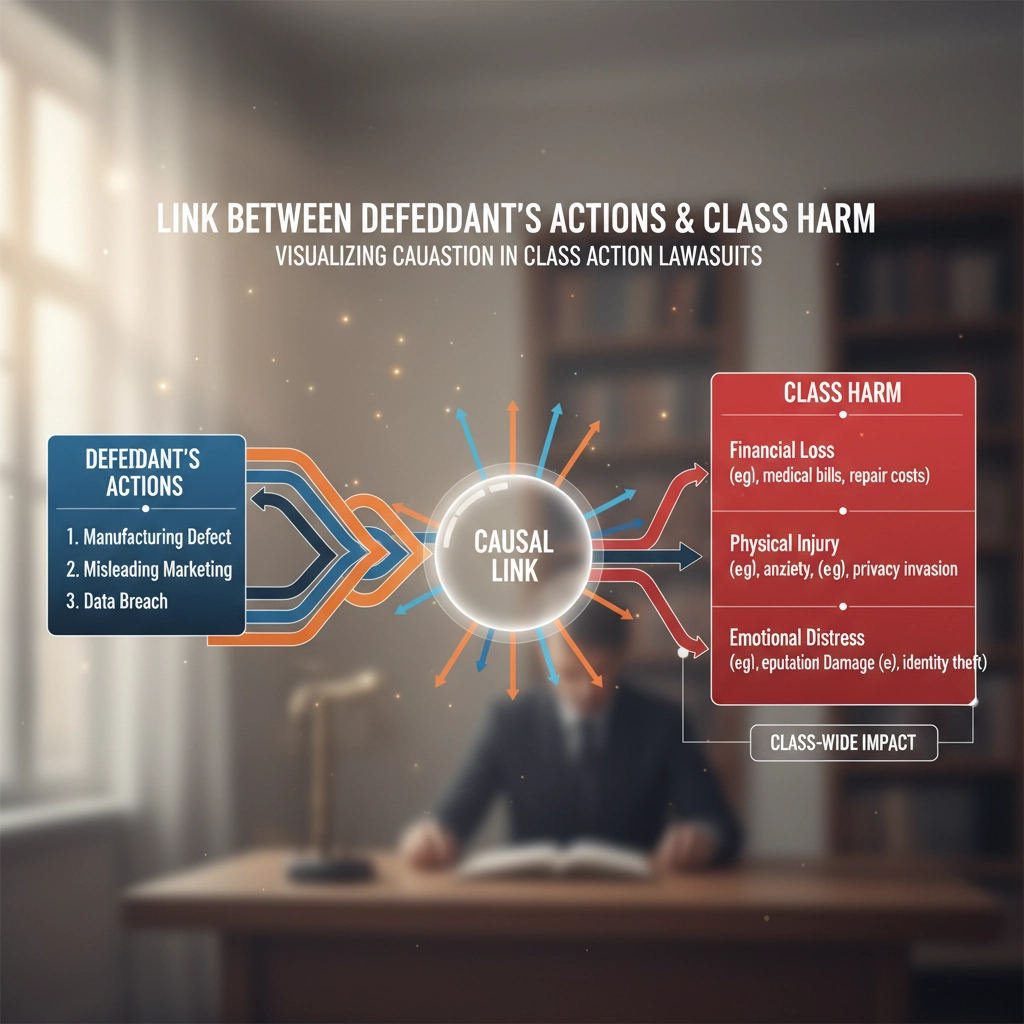
Establishing causation is a critical element of any successful class action. This involves demonstrating a direct link between the defendant’s actions and the harm suffered by the class members. Evidence of causation can take many forms, depending on the nature of the claim. In a negligence case, it might involve showing that the defendant owed a duty of care to the class members, breached that duty, and that the breach directly caused their injuries. For example, in a securities fraud case, evidence of causation might include demonstrating that the defendant made false or misleading statements about the company’s financial performance, that these statements caused the stock price to be inflated, and that the class members suffered losses when the truth was revealed and the stock price plummeted. Similarly, proving damages is essential to establishing the value of the claim. This requires presenting evidence of the actual losses suffered by the class members as a result of the defendant’s actions. Evidence of damages can include financial records, medical bills, lost wages, property damage assessments, and other documents that quantify the harm suffered. Expert testimony is often crucial in calculating damages, particularly in complex cases involving economic loss or personal injury. Demonstrating harm to the class is another critical element.


The Role of Expert Witnesses
Expert witnesses play a pivotal role in many class action lawsuits, providing specialized knowledge and opinions that are beyond the understanding of the average person. Experts can provide crucial evidence on a wide range of issues, including causation, damages, industry standards, and the feasibility of alternative designs or practices. The credibility and qualifications of expert witnesses are paramount, and their testimony must be based on sound scientific or technical principles. Expert reports are typically submitted in advance of trial, outlining the expert’s opinions and the basis for those opinions. Opposing parties have the opportunity to challenge the expert’s qualifications and the validity of their opinions through cross-examination. Courts carefully scrutinize expert testimony to ensure that it is reliable and relevant to the issues in dispute. In some cases, courts may appoint their own independent experts to provide impartial assessments of the evidence. The use of expert witnesses is particularly common in complex class actions involving pharmaceutical drugs, medical devices, environmental contamination, and securities fraud.
Documentary Evidence and Witness Testimony
In addition to expert testimony, documentary evidence and witness testimony are crucial components of a successful class action. Documentary evidence can include internal company documents, emails, memos, reports, contracts, marketing materials, and other records that shed light on the defendant’s actions and intentions. These documents can provide direct evidence of wrongdoing, establish a pattern of misconduct, or demonstrate the defendant’s knowledge of the risks associated with their products or practices. Witness testimony can provide firsthand accounts of the events that led to the class members’ injuries or losses. Witnesses may include current or former employees of the defendant, customers, suppliers, or other individuals who have relevant knowledge of the facts. Witness testimony can be particularly persuasive when it is consistent with other evidence in the case and when the witnesses are credible and articulate. The process of gathering documentary evidence and identifying potential witnesses can be time-consuming and expensive, but it is essential to building a strong evidentiary foundation for the class action.

Challenges in Gathering and Presenting Evidence
Successfully gathering and presenting evidence in a class action lawsuit can be a challenging undertaking. One of the main challenges is the sheer volume of evidence that must be collected and analyzed, particularly in large and complex cases. This can require significant resources and expertise in areas such as document management, data analysis, and forensic accounting. Another challenge is obtaining access to relevant evidence that is in the possession of the defendant. This may require the use of formal discovery procedures, such as interrogatories, document requests, and depositions. The defendant may resist these efforts, arguing that the requested information is confidential, irrelevant, or unduly burdensome to produce. Courts often play a role in resolving discovery disputes, balancing the need for access to information with the defendant’s legitimate privacy concerns. Presenting evidence in a clear and persuasive manner is also crucial. This requires careful planning and organization, as well as the use of visual aids, demonstrative exhibits, and compelling storytelling techniques.
Ultimately, the success of a class action hinges on the quality, quantity, and persuasiveness of the evidence presented. It is not enough to simply allege wrongdoing; the plaintiffs must provide concrete evidence that supports their claims and demonstrates that the class members have suffered real harm as a result of the defendant’s actions. The evidence must be carefully gathered, expertly analyzed, and presented in a manner that is both understandable and compelling to the judge or jury. While legal arguments and skillful advocacy are important, they are ultimately secondary to the strength of the evidentiary foundation upon which the case rests. Therefore, thorough investigation, meticulous documentation, and strategic presentation of evidence are essential ingredients for achieving a favorable outcome in a Canadian class action lawsuit.