
Understanding the power of collective action in disability rights
Class action lawsuits represent a powerful legal avenue for individuals with disabilities in Canada to address systemic discrimination and accessibility barriers. When a large group of people experience similar harm due to the same wrongful conduct, a class action allows them to band together and pursue a single lawsuit, amplifying their voices and increasing their chances of achieving meaningful change. This approach is particularly relevant in disability rights cases, where pervasive societal biases and structural inequalities often affect numerous individuals in similar ways, making it difficult for individuals to seek redress on their own.


The legal framework for disability rights in Canada
Canada’s commitment to disability rights is enshrined in various laws and policies, including the Canadian Charter of Rights and Freedoms, which guarantees equal protection and benefit of the law without discrimination based on disability. Provincial human rights codes further prohibit discrimination in areas such as employment, housing, and services. The Accessible Canada Act aims to create a barrier-free Canada by identifying, removing, and preventing accessibility barriers in areas under federal jurisdiction. Despite these legal protections, individuals with disabilities continue to face significant challenges in accessing employment, education, healthcare, transportation, and other essential services. Class action lawsuits provide a mechanism to hold institutions and organizations accountable for failing to meet their legal obligations and to promote systemic change that benefits the entire disability community.
When can a class action be considered?
A class action lawsuit is appropriate when a group of individuals has suffered similar harm as a result of a common issue or policy. In the context of disability rights, this could include situations where a company’s website is inaccessible to individuals who use screen readers, a public transportation system lacks adequate accommodations for wheelchair users, or an employer has a discriminatory hiring policy that excludes individuals with certain disabilities. To pursue a class action, a representative plaintiff must come forward to represent the interests of the entire class. The court must then certify the class action, meaning it must determine that the proposed class meets certain criteria, such as commonality of issues, numerosity of class members, and typicality of the representative plaintiff’s claims.

Navigating the legal process and potential outcomes
Filing and pursuing a disability rights class action lawsuit involves several steps. First, it is essential to consult with experienced legal counsel who can assess the merits of the case and guide you through the legal process. The lawyer will investigate the facts, gather evidence, and draft the necessary legal documents, including the class action complaint. Once the lawsuit is filed, the court will consider whether to certify the class action. If the class is certified, notice will be given to potential class members, informing them of their right to participate in the lawsuit or to opt out. The case may then proceed to trial, where the court will determine whether the defendant is liable for the alleged discrimination or accessibility violations. If the plaintiffs are successful, the court may order a variety of remedies, including monetary damages, injunctive relief (requiring the defendant to change its policies or practices), and systemic changes to promote accessibility and inclusion.
Examples of successful disability rights class actions
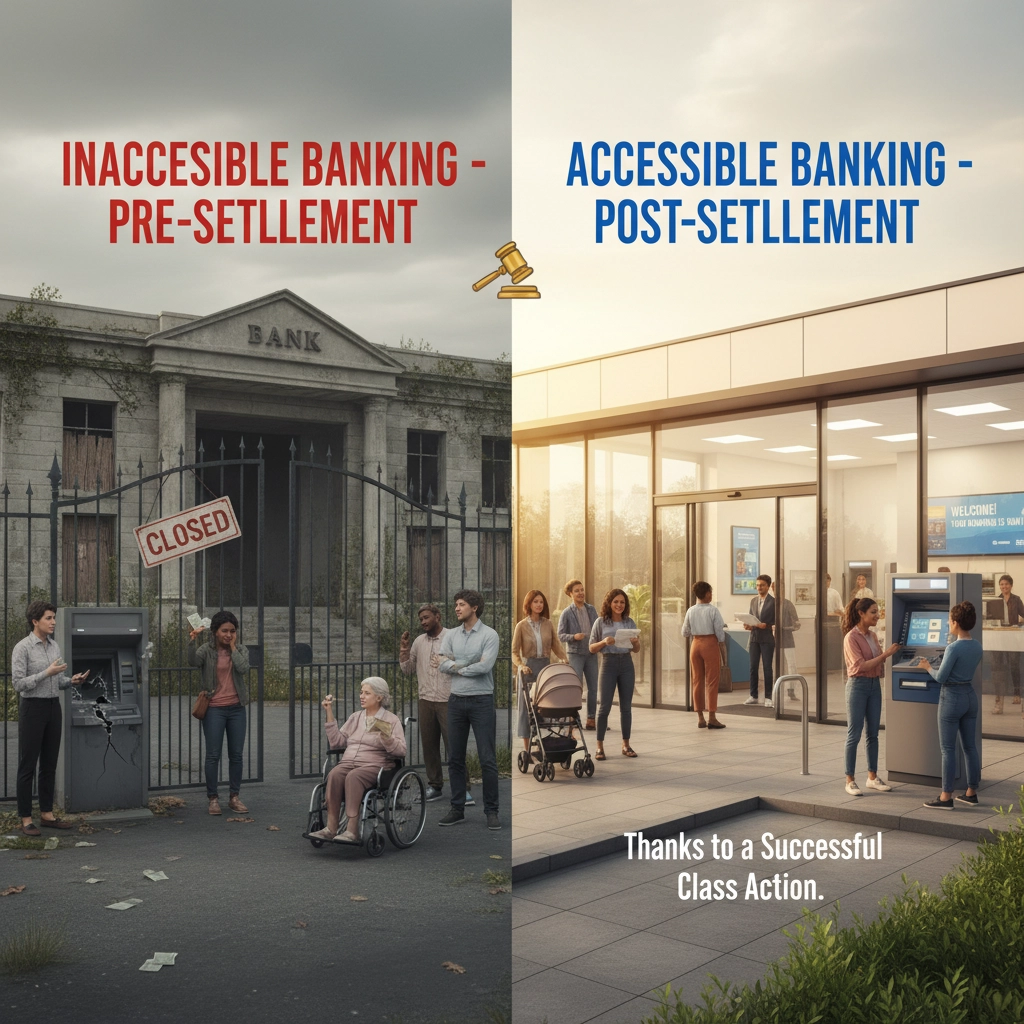
Several successful disability rights class actions in Canada have resulted in significant improvements for individuals with disabilities. One notable example involved a lawsuit against a major bank for failing to provide accessible banking services to visually impaired customers. The settlement resulted in the bank implementing accessibility upgrades to its ATMs, websites, and other services, making them more user-friendly for individuals with visual impairments. Another case involved a lawsuit against a school board for failing to provide adequate educational accommodations to students with disabilities. The settlement resulted in the school board implementing new policies and procedures to ensure that students with disabilities receive the support and resources they need to succeed academically. These examples demonstrate the potential of class action lawsuits to create positive change and advance disability rights in Canada.


Conclusion: Empowering disability rights through collective action
Class action lawsuits are a valuable tool for advancing disability rights in Canada by providing a mechanism for individuals with disabilities to collectively challenge systemic discrimination and accessibility barriers. While the legal process can be complex and time-consuming, the potential benefits of a successful class action are significant, including monetary damages, injunctive relief, and systemic changes that promote accessibility and inclusion. By working together and pursuing legal action, individuals with disabilities can hold institutions and organizations accountable and create a more equitable and accessible society for all.
Accessibility Violations: Class Action Avenues in Canada


Recognizing accessibility as a fundamental human right
Accessibility violations are a pervasive issue in Canada, despite the legal protections afforded to individuals with disabilities. These violations can manifest in various forms, including inaccessible websites, buildings, transportation systems, and services. When these violations affect a large group of people with disabilities, a class action lawsuit may be an appropriate avenue to seek redress and promote systemic change. Class actions allow individuals with similar experiences to pool their resources and expertise, increasing their chances of success and creating a greater impact on the accessibility landscape.
Defining accessibility violations under Canadian law
Accessibility is defined as the degree to which a product, device, service, or environment is available to as many people as possible. Canadian laws, such as the Accessible Canada Act and provincial accessibility legislation, mandate that organizations identify, remove, and prevent accessibility barriers in various areas, including employment, transportation, information and communication technologies, and the built environment. Accessibility violations occur when organizations fail to comply with these legal requirements, resulting in unequal access and participation for individuals with disabilities. Examples of accessibility violations include websites that are not compatible with screen readers, buildings that lack ramps or elevators, public transportation systems that do not accommodate wheelchairs, and services that are not available in alternative formats, such as Braille or large print.
Common scenarios for accessibility class actions
Several common scenarios lend themselves to class action lawsuits related to accessibility violations. One such scenario is inaccessible websites and online services. Many websites and online platforms fail to meet accessibility standards, such as the Web Content Accessibility Guidelines (WCAG), making it difficult or impossible for individuals with visual impairments, hearing impairments, or other disabilities to access online information and services. Another scenario is inaccessible public spaces, such as buildings, parks, and recreational facilities. These spaces may lack ramps, elevators, accessible restrooms, or other features that would make them usable by individuals with mobility impairments. Inaccessible transportation systems, such as buses, trains, and airplanes, are another common area of concern. These systems may lack wheelchair lifts, accessible seating, or other accommodations that would allow individuals with disabilities to travel independently and safely.
The role of the Accessible Canada Act
The Accessible Canada Act, passed in 2019, is a landmark piece of legislation that aims to create a barrier-free Canada by 2040. The Act applies to federally regulated entities, such as government departments, banks, telecommunications companies, and transportation providers. It requires these entities to develop and implement accessibility plans, establish feedback mechanisms, and report on their progress in removing accessibility barriers. While the Accessible Canada Act is a significant step forward, it does not create a private right of action, meaning individuals cannot directly sue organizations for violating the Act. However, the Act does provide a framework for accessibility standards and regulations, which can be used as evidence in class action lawsuits alleging accessibility violations.
Building a successful accessibility class action
To build a successful accessibility class action, it is essential to gather evidence of widespread accessibility violations affecting a significant number of individuals with disabilities. This evidence may include website accessibility audits, expert reports, personal testimonies, and complaints filed with regulatory agencies. It is also important to identify a representative plaintiff who is willing to come forward and represent the interests of the entire class. The representative plaintiff should be an individual with a disability who has experienced accessibility violations firsthand and is committed to pursuing the lawsuit on behalf of others. Working with experienced legal counsel who specializes in disability rights and class action litigation is crucial to navigating the legal process and maximizing the chances of success.
Conclusion: Championing accessibility through legal action
Accessibility violations are a persistent problem in Canada, but class action lawsuits offer a powerful tool for holding organizations accountable and promoting systemic change. By bringing together individuals with similar experiences and pursuing legal action collectively, it is possible to overcome barriers and create a more inclusive and accessible society for all Canadians. The Accessible Canada Act provides a framework for accessibility standards and regulations, which can be used to strengthen class action lawsuits alleging accessibility violations. With the right legal strategy and strong advocacy, accessibility class actions can pave the way for a barrier-free Canada.
Employment Discrimination & Disability: Canadian Lawsuits
Tackling workplace inequality for disabled Canadians
Employment discrimination against individuals with disabilities remains a significant issue in Canada, despite legal protections enshrined in human rights legislation. This discrimination can take many forms, including discriminatory hiring practices, denial of reasonable accommodations, and harassment or hostile work environments. When these discriminatory practices affect a group of employees with disabilities, a class action lawsuit may be an appropriate avenue to seek redress and promote systemic change within the workplace. Class actions allow employees to collectively challenge discriminatory policies and practices, increasing their chances of success and creating a more inclusive and equitable work environment for all.
Understanding employment discrimination based on disability
Employment discrimination based on disability occurs when an employer treats an employee or job applicant with a disability differently or less favorably than other employees or applicants because of their disability. This discrimination is prohibited under the Canadian Human Rights Act and provincial human rights codes. Employers have a legal duty to accommodate the needs of employees with disabilities, up to the point of undue hardship. Reasonable accommodations may include providing assistive devices, modifying work schedules, restructuring job duties, or making physical changes to the workplace. Failure to provide reasonable accommodations, without demonstrating undue hardship, constitutes discrimination.
Common scenarios for disability employment class actions
Several common scenarios can give rise to disability employment class actions in Canada. One such scenario is discriminatory hiring practices. Employers may have policies or practices that disproportionately exclude individuals with disabilities from being hired. For example, an employer may require job applicants to pass a physical fitness test that is not job-related and that screens out individuals with certain disabilities. Another scenario is denial of reasonable accommodations. Employers may refuse to provide necessary accommodations to employees with disabilities, making it difficult or impossible for them to perform their job duties. This could include refusing to provide assistive technology, modify work schedules, or provide a leave of absence for medical treatment. Harassment and hostile work environments are another area of concern. Employees with disabilities may be subjected to harassment or bullying by coworkers or supervisors, creating a hostile and intimidating work environment.
The legal framework protecting disabled employees
The Canadian Human Rights Act and provincial human rights codes prohibit discrimination in employment based on disability. These laws require employers to provide equal opportunities to individuals with disabilities and to accommodate their needs to the point of undue hardship. The concept of undue hardship is a legal standard that takes into account the financial cost of the accommodation, the disruption to the employer’s business, and the health and safety risks associated with the accommodation. Employers must demonstrate that they have made reasonable efforts to accommodate an employee’s disability before claiming undue hardship. The burden of proof is on the employer to demonstrate that an accommodation would cause undue hardship.
Building a strong disability employment class action case
To build a strong disability employment class action case, it is essential to gather evidence of widespread discriminatory practices affecting a group of employees with disabilities. This evidence may include company policies, emails, performance evaluations, witness testimonies, and expert reports. It is also important to identify a representative plaintiff who is willing to come forward and represent the interests of the entire class. The representative plaintiff should be an employee with a disability who has experienced discrimination firsthand and is committed to pursuing the lawsuit on behalf of others. Consulting with experienced legal counsel who specializes in disability rights and employment law is crucial to navigating the legal process and maximizing the chances of success. A well-prepared case should document specific instances of discrimination, demonstrate a pattern of discriminatory behavior, and quantify the damages suffered by the class members.
Conclusion: Promoting equality in the workplace
Employment discrimination against individuals with disabilities remains a persistent challenge in Canada, but class action lawsuits offer a powerful tool for holding employers accountable and promoting systemic change. By collectively challenging discriminatory policies and practices, employees with disabilities can create a more inclusive and equitable work environment for all. The Canadian Human Rights Act and provincial human rights codes provide a legal framework for protecting the rights of disabled employees, and class action lawsuits can be used to enforce these rights and ensure that employers meet their obligations. With strong advocacy and a well-prepared legal strategy, disability employment class actions can pave the way for a more inclusive and accessible workplace for all Canadians.
Understanding Your Legal Rights: Disability Class Actions in Canada
Knowing your rights as a disabled person in Canada
Individuals with disabilities in Canada possess fundamental legal rights designed to protect them from discrimination and ensure equal access to opportunities and services. These rights are enshrined in the Canadian Charter of Rights and Freedoms, the Canadian Human Rights Act, and provincial human rights codes. Understanding these rights is crucial for individuals with disabilities to effectively advocate for themselves and challenge discriminatory practices. Class action lawsuits provide a mechanism for individuals with disabilities to collectively assert their rights and seek redress for systemic violations.
Key legal protections for individuals with disabilities
The Canadian Charter of Rights and Freedoms guarantees equal protection and benefit of the law without discrimination based on disability. This means that individuals with disabilities are entitled to the same rights and freedoms as everyone else, and cannot be treated differently or less favorably because of their disability. The Canadian Human Rights Act prohibits discrimination in employment, services, and accommodations under federal jurisdiction. Provincial human rights codes provide similar protections in areas such as employment, housing, education, and services within each province. These laws require organizations to accommodate the needs of individuals with disabilities, up to the point of undue hardship.
What constitutes discrimination based on disability?
Discrimination based on disability can take many forms, including direct discrimination, indirect discrimination, and systemic discrimination. Direct discrimination occurs when an individual is treated differently or less favorably because of their disability. Indirect discrimination occurs when a policy or practice appears neutral on its face but has a discriminatory impact on individuals with disabilities. Systemic discrimination refers to patterns of discriminatory behavior that are embedded in an organization’s policies, practices, or culture. Examples of disability discrimination include denying employment opportunities, refusing to provide reasonable accommodations, denying access to services, and subjecting individuals with disabilities to harassment or bullying.
The process of filing a human rights complaint
Individuals who believe they have experienced discrimination based on disability have the right to file a human rights complaint with the Canadian Human Rights Commission or their provincial human rights tribunal. The complaint must be filed within a specific time frame, typically one year from the date of the alleged discrimination. The human rights commission or tribunal will investigate the complaint and determine whether there is sufficient evidence to support the claim. If the complaint is substantiated, the commission or tribunal may order remedies such as monetary damages, reinstatement of employment, and changes to discriminatory policies or practices.
When is a class action lawsuit appropriate?
A class action lawsuit is appropriate when a group of individuals has suffered similar harm as a result of a common issue or policy. In the context of disability rights, this could include situations where a company’s website is inaccessible to individuals who use screen readers, a public transportation system lacks adequate accommodations for wheelchair users, or an employer has a discriminatory hiring policy that excludes individuals with certain disabilities. To pursue a class action, a representative plaintiff must come forward to represent the interests of the entire class. The court must then certify the class action, meaning it must determine that the proposed class meets certain criteria, such as commonality of issues, numerosity of class members, and typicality of the representative plaintiff’s claims.
Conclusion: Empowering yourself through knowledge
Understanding your legal rights as an individual with a disability in Canada is essential for advocating for yourself and challenging discriminatory practices. The Canadian Charter of Rights and Freedoms, the Canadian Human Rights Act, and provincial human rights codes provide a strong legal framework for protecting the rights of individuals with disabilities. Class action lawsuits offer a powerful tool for collectively asserting these rights and seeking redress for systemic violations. By knowing your rights and working together, individuals with disabilities can create a more equitable and inclusive society for all.
Winning Strategies for Disability Rights Class Action Lawsuits in Canada: A Lawyer’s Perspective
Crafting successful disability rights legal strategies
Disability rights class action lawsuits in Canada require a strategic and comprehensive approach to maximize the chances of success. As a lawyer specializing in this area, I’ve seen firsthand the importance of meticulous preparation, compelling evidence, and a deep understanding of the legal landscape. A successful strategy involves identifying the key legal issues, gathering strong evidence of systemic discrimination, and effectively communicating the impact of the discriminatory practices on the class members.
Identifying key legal issues and building a strong case
The first step in any disability rights class action is to identify the key legal issues at the heart of the case. This involves analyzing the relevant laws and regulations, such as the Canadian Charter of Rights and Freedoms, the Canadian Human Rights Act, and provincial human rights codes, to determine whether the defendant has violated the rights of individuals with disabilities. Once the legal issues have been identified, it is essential to gather strong evidence of systemic discrimination. This evidence may include company policies, emails, performance evaluations, witness testimonies, and expert reports. It is also important to quantify the damages suffered by the class members, such as lost wages, medical expenses, and emotional distress.
The importance of expert testimony and evidence gathering
Expert testimony can play a crucial role in disability rights class action lawsuits. Experts can provide valuable insights into the nature of disability, the impact of discriminatory practices, and the feasibility of accommodations. For example, an accessibility expert can assess whether a website or building is accessible to individuals with disabilities, and an employment expert can testify about the availability of reasonable accommodations in the workplace. Gathering evidence is a critical component of building a strong case. This may involve conducting discovery, which includes requesting documents from the defendant, taking depositions of witnesses, and issuing interrogatories. It is also important to conduct thorough investigations to uncover evidence of systemic discrimination, such as discriminatory hiring practices or denial of reasonable accommodations.
Navigating the certification process effectively
The certification process is a crucial stage in a class action lawsuit. In order for a class action to proceed, the court must certify the class, meaning it must determine that the proposed class meets certain criteria. These criteria typically include numerosity, commonality, typicality, and adequacy of representation. Numerosity requires that the class be so numerous that joinder of all members is impracticable. Commonality requires that there be questions of law or fact common to the class. Typicality requires that the claims or defenses of the representative parties be typical of the claims or defenses of the class. Adequacy of representation requires that the representative parties fairly and adequately protect the interests of the class. To successfully navigate the certification process, it is essential to present strong evidence that the proposed class meets these criteria. This may involve submitting affidavits from class members, expert reports, and legal arguments.
Settlement negotiations and maximizing class recovery
Settlement negotiations are a common part of class action lawsuits. In many cases, the parties will attempt to reach a settlement agreement to avoid the time and expense of trial. Settlement negotiations can be complex and require careful consideration of the interests of the class members. It is important to ensure that any settlement agreement is fair, reasonable, and adequate. This may involve conducting a thorough analysis of the potential recovery at trial, as well as the risks and uncertainties of litigation. Maximizing class recovery is a key goal in any class action lawsuit. This may involve seeking monetary damages, injunctive relief, and other remedies that will benefit the class members. Injunctive relief may include requiring the defendant to change its policies or practices to prevent future discrimination.
Conclusion: Advocating for justice and equality
Disability rights class action lawsuits are a powerful tool for advocating for justice and equality for individuals with disabilities in Canada. By working strategically and diligently, lawyers can help to level the playing field and ensure that individuals with disabilities have the same opportunities as everyone else. A successful disability rights class action can not only provide compensation to those who have been harmed by discrimination but also bring about systemic change that benefits the entire disability community.