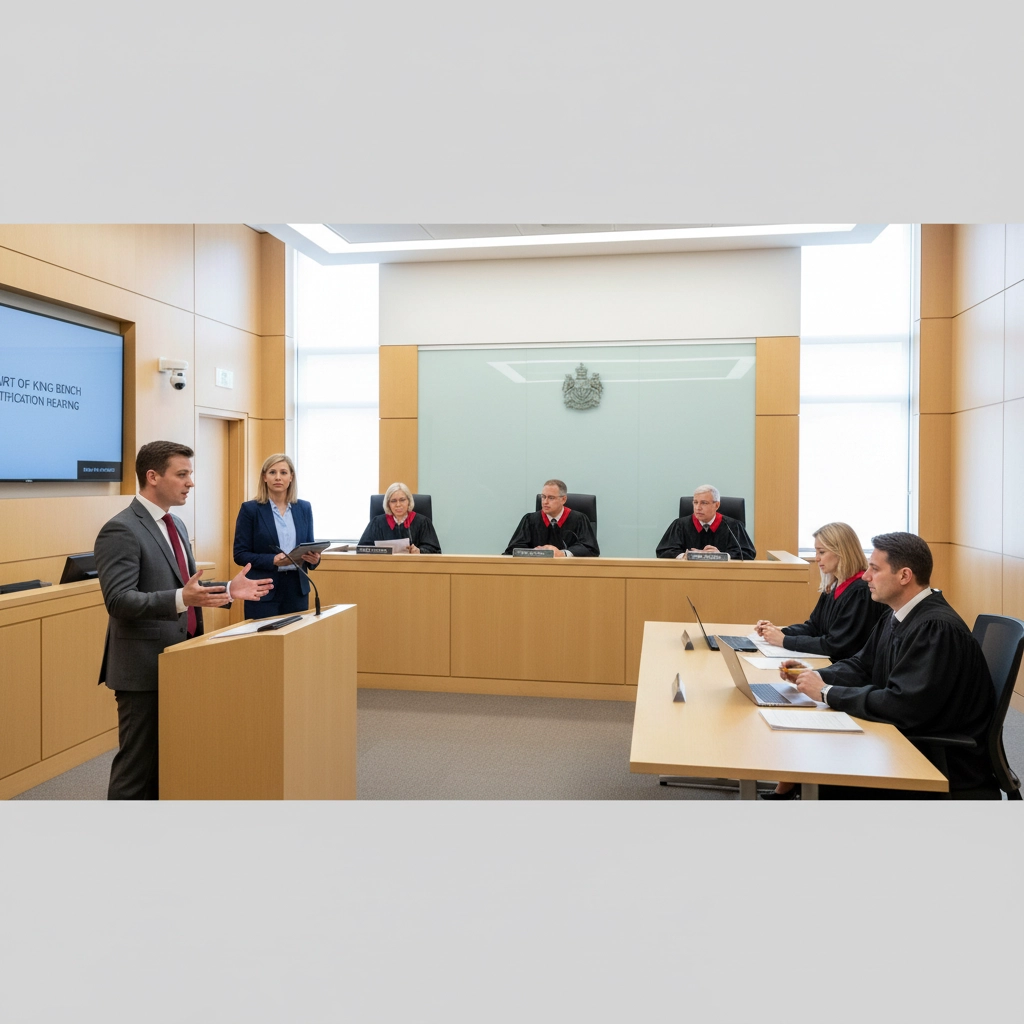
Understanding the class certification process in Canada is crucial for both plaintiffs and defendants involved in potential class action lawsuits. This process determines whether a lawsuit can proceed as a class action, representing a group of individuals with similar claims, or if it must be pursued as individual actions. The certification hearing is the pivotal point where a judge decides this fate, making thorough preparation and a clear understanding of the legal requirements essential. Success at this stage can significantly impact the scope and potential outcome of the litigation.


The Purpose of Class Certification
The primary objective of a class certification hearing is for the court to assess whether the criteria for a class action, as outlined in provincial class proceedings legislation, are met. These criteria typically include: (1) an identifiable class of two or more persons; (2) common issues of fact or law among the class members; (3) a representative plaintiff who can adequately represent the interests of the class; (4) a preferable procedure, meaning that a class action is a more efficient and fair method of resolving the claims than individual lawsuits; and (5) a cause of action, demonstrating a legal basis for the claims. The hearing allows the court to scrutinize the evidence and arguments presented by both sides to determine if these elements are sufficiently established to warrant proceeding as a class action. The onus is on the plaintiff to demonstrate that these criteria are met on a balance of probabilities. This requires the plaintiff to present persuasive evidence and legal arguments to convince the court that a class action is the most appropriate way to address the claims.
Key Elements of a Certification Hearing
A class certification hearing typically involves several key elements. First, the representative plaintiff presents evidence and legal arguments to demonstrate that the certification requirements are met. This may include affidavits from potential class members, expert reports, and legal precedents. The defendant, on the other hand, will attempt to rebut the plaintiff’s evidence and arguments, highlighting any weaknesses in the plaintiff’s case and arguing that one or more of the certification requirements are not satisfied. The hearing may also involve cross-examination of witnesses, allowing both sides to challenge the evidence presented by the opposing party. The judge will carefully consider all the evidence and arguments presented before rendering a decision. This decision will determine whether the lawsuit can proceed as a class action or if it must be pursued as individual actions. The entire process is governed by procedural rules and evidentiary standards, ensuring fairness and impartiality.


Preparing for a Class Certification Hearing
Effective preparation is paramount for both plaintiffs and defendants facing a class certification hearing. For plaintiffs, this involves gathering substantial evidence to support each of the certification requirements. This includes identifying and locating potential class members, collecting evidence of common issues, securing expert reports if necessary, and carefully selecting a representative plaintiff who can adequately represent the interests of the class. Plaintiffs must also anticipate potential challenges from the defendant and develop strategies to address those challenges. For defendants, preparation involves a thorough review of the plaintiff’s case to identify weaknesses and develop arguments to demonstrate that the certification requirements are not met. This may include challenging the commonality of the issues, the adequacy of the representative plaintiff, or the superiority of a class action over individual actions. Defendants may also present their own evidence, such as expert reports, to counter the plaintiff’s evidence. A key aspect of preparation for both sides is to conduct thorough legal research to identify relevant case law and statutes that support their respective positions. Effective preparation also involves developing a clear and concise presentation of the evidence and arguments, ensuring that the judge can easily understand the key points.
Common Challenges and Arguments
Both plaintiffs and defendants often face common challenges and arguments during class certification hearings. Plaintiffs frequently encounter challenges regarding the commonality requirement, where the defendant argues that the issues are not sufficiently common among the class members to justify a class action. Defendants may argue that individual issues predominate over common issues, making a class action unmanageable. Another common challenge is the adequacy of the representative plaintiff, where the defendant argues that the representative plaintiff cannot adequately represent the interests of the class, due to conflicts of interest or lack of knowledge. Plaintiffs may also face challenges in demonstrating that a class action is the preferable procedure, with defendants arguing that individual lawsuits or other methods of dispute resolution would be more efficient and fair. Defendants often raise arguments regarding the ascertainability of the class, arguing that it is too difficult to identify the class members. Plaintiffs must be prepared to address these challenges with persuasive evidence and legal arguments. Defendants must also be prepared to counter the plaintiff’s arguments with their own evidence and legal analysis.
Expert evidence often plays a crucial role in class certification hearings, particularly in complex cases involving scientific, technical, or economic issues.
The Role of Expert Evidence
Expert evidence often plays a crucial role in class certification hearings, particularly in complex cases involving scientific, technical, or economic issues. Experts can provide opinions and analysis on various aspects of the case, such as the commonality of the issues, the feasibility of a class-wide remedy, or the economic impact of the alleged wrongdoing. For example, in a product liability case, an expert may provide an opinion on whether a defect in a product is common to all class members. In a securities fraud case, an expert may provide an opinion on whether a misrepresentation affected the price of a security. The admissibility of expert evidence is subject to certain rules and standards, including the requirement that the expert be qualified and the evidence be reliable and relevant. Courts will carefully scrutinize expert evidence to ensure that it meets these standards before admitting it. Both plaintiffs and defendants must carefully select and prepare their experts to ensure that their evidence is persuasive and admissible. The expert’s report should be well-reasoned, supported by data and analysis, and clearly explained. The expert should also be prepared to testify at the hearing and be cross-examined by the opposing party.
Strategic Considerations and Tactics
Strategic considerations and tactics are essential components of a successful class certification strategy. Plaintiffs must carefully consider the scope of the proposed class, the selection of the representative plaintiff, and the presentation of evidence to maximize their chances of success. Defendants must develop a strategy to identify and exploit weaknesses in the plaintiff’s case, challenge the certification requirements, and present their own evidence to counter the plaintiff’s arguments. Both sides must also consider the potential impact of the certification decision on the overall litigation. A successful certification can significantly increase the value of the case for the plaintiff, while a denial of certification can significantly reduce the value of the case for the defendant. Settlement discussions often occur before, during, and after the certification hearing. The outcome of the certification hearing can significantly influence the settlement value of the case. Plaintiffs may use the threat of certification to pressure the defendant into settlement, while defendants may use the risk of denial of certification to reduce the settlement demand. A well-developed and executed strategy can significantly improve a party’s chances of success at the certification hearing and throughout the litigation.
In conclusion, class certification hearings in Canada are complex and critical proceedings that require careful preparation and a thorough understanding of the legal requirements. Both plaintiffs and defendants must gather compelling evidence, develop persuasive legal arguments, and consider strategic tactics to maximize their chances of success. The outcome of the certification hearing can have a significant impact on the scope and potential outcome of the litigation, making it essential to approach this stage with diligence and expertise. The role of expert evidence and the ability to anticipate and address common challenges are also key factors in navigating the complexities of the class certification process.