



Understanding the Stages of Class Action Lawsuits
Class action lawsuits in Canada are complex legal proceedings that can take a significant amount of time to resolve. These lawsuits involve a large group of people who have suffered similar harm as a result of the same or similar actions by a defendant. The duration of a class action can vary widely depending on factors such as the complexity of the case, the number of plaintiffs involved, the jurisdiction in which the lawsuit is filed, and the defendant’s willingness to settle. Understanding the typical stages involved in a class action and the estimated timeframes for each stage can help potential class members and defendants better anticipate the legal process. Understanding the process is essential for plaintiffs


Initiating a Class Action: Certification
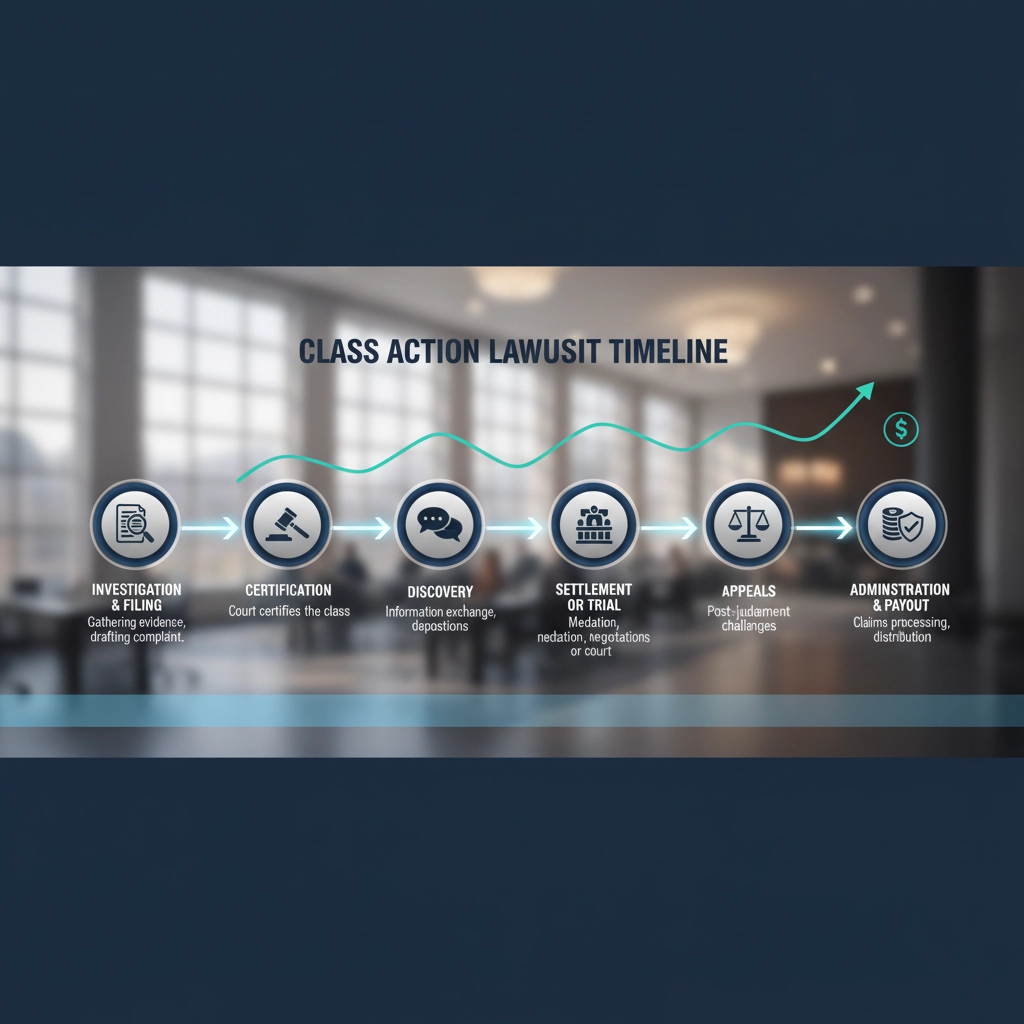
The first critical stage in a class action is certification. This is the process where a judge determines whether the lawsuit meets the criteria to proceed as a class action. In Canada, the requirements for certification generally include demonstrating that there is an identifiable class of two or more persons, that the class members’ claims raise common issues, that a class action is the preferable procedure for resolving the claims, and that there is a representative plaintiff who can adequately represent the interests of the class. The certification process typically involves the filing of a motion for certification, supporting affidavits and documents, and oral arguments before a judge. The time it takes to obtain certification can vary significantly, ranging from several months to a few years, depending on the complexity of the case and the court’s schedule. If certification is denied, the lawsuit cannot proceed as a class action.
Pre-Trial Procedures: Discovery and Motions
Once a class action is certified, the case proceeds to the pre-trial phase, which includes discovery and motion practice. Discovery involves the exchange of information between the parties, including documents, interrogatories (written questions), and oral examinations (depositions). The purpose of discovery is to allow each party to gather the evidence needed to support their case. Motion practice involves the filing of various motions with the court, such as motions for summary judgment, motions to dismiss, and motions to compel discovery. The pre-trial phase can be a lengthy process, often taking one to three years or more, depending on the complexity of the case and the amount of discovery required. Settlement discussions may also occur during this phase.


Settlement Negotiations and Approval
Settlement negotiations can occur at any stage of a class action, but they often become more intensive after the certification process and during or after the discovery phase. If a settlement is reached between the parties, it must be approved by the court. The court will consider whether the settlement is fair, reasonable, and in the best interests of the class members. The settlement approval process typically involves notice to the class members, an opportunity for class members to object to the settlement, and a hearing before a judge. The time it takes to obtain settlement approval can range from several months to a year or more. If the court approves the settlement, the claims process begins. If the court does not approve the settlement, the parties may attempt to renegotiate the settlement or proceed to trial. Learn more about the eligibility criteria.
Trial and Appeals
If a settlement is not reached, the class action will proceed to trial. Class action trials can be complex and lengthy, often lasting several weeks or months. After the trial, the judge will render a decision. The losing party has the right to appeal the decision to a higher court. The appeals process can add significant time to the resolution of a class action, potentially taking one to two years or more for each level of appeal. The possibility of appeals is a significant factor in determining the overall timeline of a class action. Even after a trial victory, the final resolution may be delayed pending the outcome of any appeals.

Claims Administration and Distribution
Following settlement approval or a successful trial, the claims administration process begins. This involves notifying class members of the settlement or judgment and providing them with instructions on how to file a claim to receive their share of the settlement fund or judgment amount. The claims administration process can take several months to a year or more, depending on the size and complexity of the class and the claims process. Once all claims have been processed, the settlement fund or judgment amount is distributed to the eligible class members. The claims administration process is a crucial step in ensuring that class members receive the compensation they are entitled to. Weighing the potential benefits
Conclusion: Patience is Key in Class Actions
In summary, the timeline for a class action lawsuit in Canada can vary greatly depending on several factors. From the initial certification process to pre-trial procedures, settlement negotiations, potential trials and appeals, and finally, claims administration, each stage contributes to the overall duration. Class members and defendants should be prepared for a potentially lengthy legal process. While some class actions may be resolved relatively quickly through settlement, others can take several years to make their way through the courts. Understanding the various stages and potential timelines involved can help individuals better navigate the complexities of class action litigation.


Canadian Class Action Timelines: Key Influencing Factors
Complexity of the Case: Impact on Duration
The complexity of a class action lawsuit is a major determinant of its duration. Complex cases typically involve intricate legal and factual issues, a large number of class members, and extensive evidence. These cases often require significant discovery, expert testimony, and lengthy court proceedings. For example, class actions involving allegations of securities fraud, antitrust violations, or product liability often involve complex financial or scientific evidence that requires considerable time to analyze and present in court. The more complex the case, the longer it will likely take to resolve.
Number of Plaintiffs and Jurisdictions
The number of plaintiffs involved in a class action can also affect its timeline. Cases with a large number of class members often require more time for notice, claims administration, and settlement distribution. Additionally, if the class members are located in multiple jurisdictions, the lawsuit may involve complex jurisdictional issues that can add to the time it takes to resolve the case. Coordinating legal proceedings across multiple jurisdictions can be particularly challenging and time-consuming.
Defendant’s Strategy and Willingness to Settle
The defendant’s litigation strategy and willingness to settle are crucial factors in determining the timeline of a class action. If the defendant is willing to engage in good-faith settlement negotiations early in the process, the case may be resolved relatively quickly. However, if the defendant vigorously defends the lawsuit and refuses to settle, the case may proceed to trial, which can add significant time to the litigation. The defendant’s litigation strategy can also affect the amount of discovery required and the number of motions filed, both of which can impact the timeline.
Court’s Schedule and Resources
The court’s schedule and available resources can also play a role in the timeline of a class action. Courts with heavy caseloads may have difficulty scheduling hearings and trials in a timely manner, which can delay the resolution of the case. Additionally, the availability of judicial resources, such as judges and court staff, can affect the efficiency of the court system and the speed at which cases are processed. The court’s management of the case, including setting deadlines and managing discovery disputes, can also impact the timeline.
Impact of Interlocutory Appeals
Interlocutory appeals, which are appeals of rulings made by the court during the course of the litigation, can significantly impact the timeline of a class action. If a party appeals a ruling on a key issue, such as class certification or a motion for summary judgment, the proceedings in the trial court may be stayed pending the outcome of the appeal. Interlocutory appeals can add months or even years to the timeline of a class action.
Conclusion: Weighing Factors in Class Action Duration
In conclusion, several factors can influence the timeline of a class action lawsuit in Canada. These factors include the complexity of the case, the number of plaintiffs involved, the defendant’s strategy and willingness to settle, the court’s schedule and resources, and the possibility of interlocutory appeals. Understanding these factors can help potential class members and defendants better anticipate the legal process and plan accordingly. While it is impossible to predict the exact timeline of a class action, considering these factors can provide a general sense of the potential duration.
Navigating Delays in Canadian Class Action Lawsuits
Causes of Delays: Complexity and Discovery
Delays are a common occurrence in Canadian class action lawsuits. The complexity of these cases often leads to extensive discovery, motion practice, and court proceedings, all of which can contribute to delays. The sheer volume of documents and information that must be reviewed and analyzed can be overwhelming, and discovery disputes are common, further delaying the process. Complex legal issues and novel legal theories can also contribute to delays, as the court may need to conduct extensive legal research and analysis to resolve these issues.
Impact of Certification Challenges
Challenges to class certification are a frequent cause of delays in class action lawsuits. Defendants often oppose class certification, arguing that the requirements for certification have not been met. These challenges can lead to lengthy hearings and appeals, delaying the progress of the case. Even if the class is eventually certified, the time spent litigating the certification issue can be significant.
Settlement Negotiation Stalemates
Settlement negotiations can also be a source of delays in class action lawsuits. If the parties are unable to reach an agreement on the terms of a settlement, the case may proceed to trial, which can add significant time to the litigation. Even if the parties are engaged in settlement negotiations, the process can be lengthy and complex, particularly in cases with a large number of class members and complex legal issues. Disagreements over the value of the claims or the scope of the settlement can also lead to delays.
Court Scheduling and Administrative Hurdles
Court scheduling and administrative hurdles can also contribute to delays in class action lawsuits. Courts with heavy caseloads may have difficulty scheduling hearings and trials in a timely manner. Additionally, administrative issues, such as the need to translate documents or coordinate proceedings across multiple jurisdictions, can also cause delays. The court’s management of the case, including setting deadlines and managing discovery disputes, can also impact the timeline.
Strategies for Mitigating Delays
While delays are often unavoidable in class action lawsuits, there are strategies that can be used to mitigate their impact. These strategies include early and active case management by the court, efficient discovery practices, and a willingness by the parties to engage in good-faith settlement negotiations. The use of technology, such as electronic document management systems and virtual hearings, can also help to streamline the litigation process and reduce delays. Additionally, clear and concise communication between the parties and the court can help to avoid misunderstandings and resolve disputes more quickly.
Conclusion: Proactive Management of Time
In conclusion, delays are a common challenge in Canadian class action lawsuits. These delays can be caused by a variety of factors, including the complexity of the case, challenges to class certification, settlement negotiation stalemates, and court scheduling and administrative hurdles. While it is impossible to eliminate delays entirely, there are strategies that can be used to mitigate their impact. By proactively managing the litigation process and employing efficient and effective practices, parties can help to minimize delays and bring class action lawsuits to a timely resolution. Staying informed about the progress of the lawsuit can help you stay on top of the process
The Role of Technology in Accelerating Class Action Timelines
E-Discovery: Streamlining Information Gathering
Technology plays an increasingly important role in accelerating the timelines of class action lawsuits. One of the most significant ways technology can expedite these cases is through e-discovery. E-discovery involves the use of electronic tools and techniques to identify, collect, and produce electronic documents and information relevant to the lawsuit. By using e-discovery, parties can significantly reduce the time and cost associated with traditional paper-based discovery. E-discovery tools can also help to streamline the review and analysis of large volumes of electronic data, making it easier to identify key evidence and prepare for trial.
Online Claims Portals: Efficient Claims Administration
Online claims portals are another technology that can help to accelerate class action timelines. These portals allow class members to submit their claims electronically, reducing the time and cost associated with traditional paper-based claims administration. Online claims portals can also automate the claims processing process, making it easier to verify claims and distribute settlement funds. Additionally, online claims portals can provide class members with real-time updates on the status of their claims, improving communication and transparency.
Virtual Hearings and Mediations
Virtual hearings and mediations are becoming increasingly common in class action lawsuits, particularly in light of the COVID-19 pandemic. Virtual hearings and mediations can save time and money by eliminating the need for parties and lawyers to travel to court or mediation centers. Virtual hearings and mediations can also be more flexible and convenient, allowing parties to participate from anywhere with an internet connection. While virtual hearings and mediations may not be appropriate for all cases, they can be a valuable tool for resolving disputes more quickly and efficiently.
Data Analytics: Identifying Trends and Patterns
Data analytics tools can also be used to accelerate class action timelines. These tools can help to identify trends and patterns in large datasets, making it easier to prove or disprove the allegations in the lawsuit. Data analytics can be particularly useful in cases involving complex financial or scientific evidence. By using data analytics, parties can more quickly and efficiently analyze the evidence and prepare their case for trial or settlement negotiations.
AI and Machine Learning: Automating Tasks
Artificial intelligence (AI) and machine learning are emerging technologies that have the potential to further accelerate class action timelines. AI and machine learning can be used to automate a variety of tasks, such as document review, data analysis, and claims processing. By automating these tasks, AI and machine learning can significantly reduce the time and cost associated with class action litigation. While AI and machine learning are still in their early stages of development, they hold great promise for transforming the way class action lawsuits are litigated.
Conclusion: Embracing Technology for Efficiency
In conclusion, technology plays a crucial role in accelerating the timelines of class action lawsuits. From e-discovery and online claims portals to virtual hearings and data analytics, technology can help to streamline the litigation process and reduce delays. As technology continues to evolve, it is likely to play an even greater role in accelerating class action timelines in the future. By embracing technology, parties can help to make class action litigation more efficient, cost-effective, and accessible.
Strategies for Expediting Your Class Action Lawsuit
Early Case Assessment: Know Your Case
One of the most effective strategies for expediting a class action lawsuit is to conduct an early case assessment. This involves thoroughly evaluating the strengths and weaknesses of your case at the outset of the litigation. By understanding the key issues and evidence, you can develop a focused and efficient litigation strategy. An early case assessment can also help you to identify potential settlement opportunities and avoid unnecessary delays.
Proactive Case Management: Taking Control
Proactive case management is another important strategy for expediting a class action lawsuit. This involves actively managing the litigation process to ensure that deadlines are met and disputes are resolved quickly. Proactive case management can include setting clear goals and objectives, developing a detailed litigation plan, and regularly communicating with the court and opposing counsel. By taking control of the litigation process, you can help to keep the case on track and avoid unnecessary delays.
Efficient Discovery Practices: Targeted Information
Efficient discovery practices are essential for expediting a class action lawsuit. This involves focusing your discovery requests on the most relevant information and avoiding overly broad or burdensome requests. Efficient discovery practices can also include using technology to streamline the discovery process, such as e-discovery tools and online document repositories. By conducting discovery efficiently, you can reduce the time and cost associated with this phase of the litigation.
Strategic Motion Practice: Focus on Key Issues
Strategic motion practice can also help to expedite a class action lawsuit. This involves filing motions only when they are necessary to resolve key issues in the case. By avoiding unnecessary motions, you can save time and money and avoid delaying the litigation process. Strategic motion practice can also include focusing your arguments on the strongest legal and factual points and presenting them in a clear and concise manner.
Negotiation and Mediation: Seeking Resolution
Negotiation and mediation are valuable tools for expediting a class action lawsuit. By engaging in good-faith settlement negotiations early in the litigation process, you may be able to resolve the case without the need for a lengthy and costly trial. Mediation can be a particularly effective way to resolve disputes, as it allows the parties to work together to find a mutually acceptable solution. Even if settlement is not possible, negotiation and mediation can help to narrow the issues in dispute and streamline the litigation process.
Conclusion: Taking Charge of the Process
In conclusion, there are several strategies that can be used to expedite a class action lawsuit. These strategies include early case assessment, proactive case management, efficient discovery practices, strategic motion practice, and negotiation and mediation. By employing these strategies, you can help to keep the case on track and avoid unnecessary delays. While it is impossible to guarantee a quick resolution, taking a proactive and strategic approach to litigation can significantly improve your chances of expediting the process. Consulting with a lawyer can help you make an informed decision